
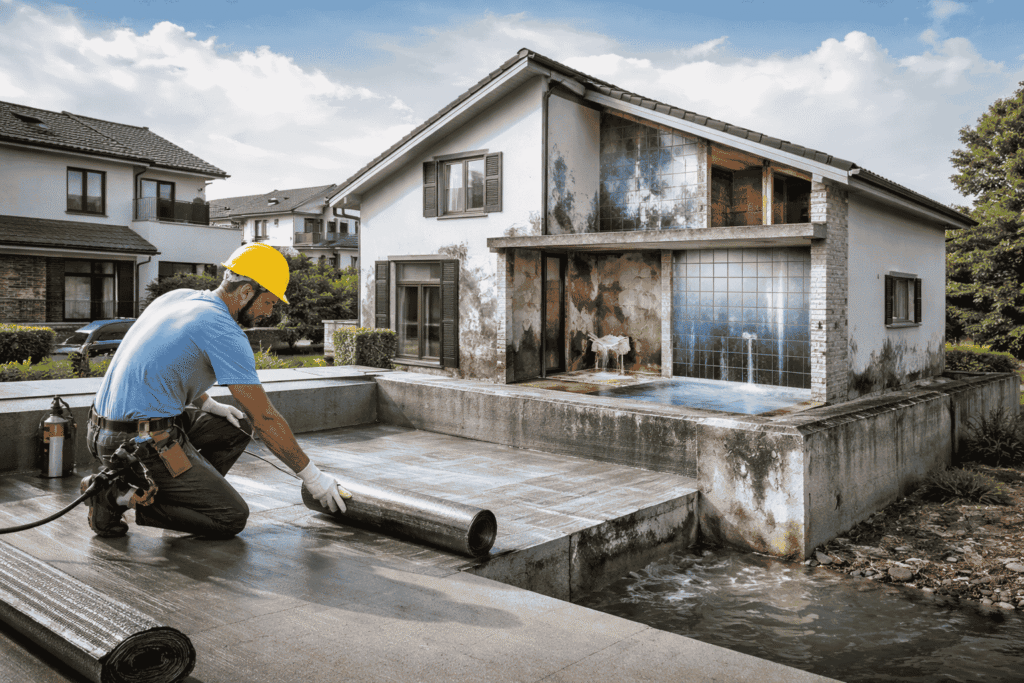
Waterproofing is one of the most important parts of building maintenance. Many homeowners think waterproofing is a one time job. In reality, waterproofing needs regular attention to keep a building safe from water damage.
Water leakage may not always show clear signs at the beginning. Small seepage issues slowly grow into major problems if they are ignored. This is why knowing how often waterproofing should be done is very important for every residential building.
In this blog, we will explain when waterproofing is needed, how often it should be done, and how proper waterproofing can save money in the long run.
Why Waterproofing Is Important for Homes
Water can enter a building in many ways. Rainwater, plumbing leaks, and moisture from the ground can slowly damage walls, ceilings, and concrete structures.
Without proper waterproofing, homes can face problems like damp walls, peeling paint, mold growth, and weak structures. Over time, this can reduce the life of the building and affect the health of people living inside.
Waterproofing creates a protective layer that stops water from entering the structure. This protection needs to be checked and maintained from time to time.
Is Waterproofing a One Time Solution
Many homeowners believe that once waterproofing is done, it will last forever. This is not completely true.
Waterproofing materials are exposed to weather changes, heat, rain, and building movement. Over time, these factors reduce the effectiveness of waterproofing systems.
Just like painting or plumbing maintenance, waterproofing also needs periodic inspection and renewal.
How Often Should Waterproofing Be Done
There is no single answer that fits every building. The frequency of waterproofing depends on several factors such as the age of the building, construction quality, and weather conditions.
In general, waterproofing should be checked every five to seven years for residential buildings. In some cases, it may be required earlier.
Regular inspections help identify early signs of failure so that timely action can be taken.
Waterproofing for New Residential Buildings
For new buildings, waterproofing should be done during the construction stage itself. Areas like terraces, bathrooms, basements, and external walls must be treated properly before the building is occupied.
If waterproofing is done correctly at this stage, it can last for several years without major issues. However, even new buildings should be inspected after a few years to ensure everything is working as expected.
Professional companies like Hallmark Waterproofing Solutions ensure proper application of waterproofing systems during construction, which helps avoid future leakage problems.
Waterproofing for Old Buildings
Older buildings usually need more frequent waterproofing attention. Over time, cracks develop due to settlement and material aging. Old pipelines and poor drainage systems also increase leakage risk.
For buildings that are more than ten years old, waterproofing inspection should be done every three to five years. If signs of leakage are already visible, waterproofing should be done immediately.
Ignoring seepage in old buildings can lead to serious structural damage and high repair costs.
Signs That Waterproofing Is Needed Immediately
Sometimes waterproofing cannot wait for a fixed time period. Certain signs clearly indicate that waterproofing work is required.
Some common signs include damp patches on walls, peeling paint, water stains on ceilings, and a musty smell inside rooms. Cracks in walls or water dripping during rains are also warning signs.
If any of these issues are noticed, it is important to contact waterproofing experts without delay.
Hallmark Waterproofing Solutions uses advanced inspection methods such as thermal imaging to identify hidden leakage before it becomes a major issue.
Areas That Need Regular Waterproofing Attention
Not all parts of a house face the same level of water exposure. Some areas are more prone to leakage and need frequent checks.
Terraces and roofs are constantly exposed to sun and rain. Bathrooms and kitchens face daily water usage. Basements are in contact with ground moisture. External walls face weather changes throughout the year.
These areas should be inspected regularly and waterproofed whenever signs of damage appear.
How Climate Affects Waterproofing Frequency
Weather plays a major role in waterproofing durability. In areas with heavy rainfall or long monsoon seasons, waterproofing systems wear out faster.
High heat can also cause cracks in concrete and waterproofing layers. Buildings in such climates may require waterproofing more frequently than those in mild weather conditions.
Professional assessment helps decide the right waterproofing schedule based on local climate conditions.
Importance of Professional Waterproofing Inspection
Many leakage problems start internally and remain hidden for a long time. Visual inspection alone is often not enough.
Professional waterproofing companies use modern tools to detect moisture and hidden seepage. This helps in identifying problems early and applying the right solution.
Hallmark Waterproofing Solutions focuses on accurate diagnosis before starting any repair work. This ensures that waterproofing is done only where needed and lasts longer.
How Regular Waterproofing Saves Money
Some homeowners delay waterproofing to avoid expenses. This often results in higher costs later.
Small seepage issues can damage concrete, weaken structures, and cause mold growth. Repairing such damage is far more expensive than timely waterproofing.
Regular waterproofing protects the building, reduces repair costs, and increases property value. It also provides peace of mind during heavy rains and seasonal changes.
Choosing the Right Waterproofing Partner
The effectiveness of waterproofing depends not only on how often it is done but also on who does it. Poor quality work can fail within a short time.
Choosing an experienced and reliable waterproofing company is essential. Hallmark Waterproofing Solutions offers customized waterproofing solutions based on building condition and problem areas.
Their professional approach ensures long lasting protection and minimal disruption to daily life.
Final Thoughts
Waterproofing is not something that should be ignored or delayed. It is a continuous part of building maintenance.
For most residential buildings, waterproofing should be inspected every five to seven years. Older buildings and leak prone areas may need more frequent attention.
Timely waterproofing helps protect your home, saves money, and increases the life of the building.
If you want expert advice and long-term waterproofing solutions, Hallmark Waterproofing Solutions can help keep your home safe and dry for years to come.